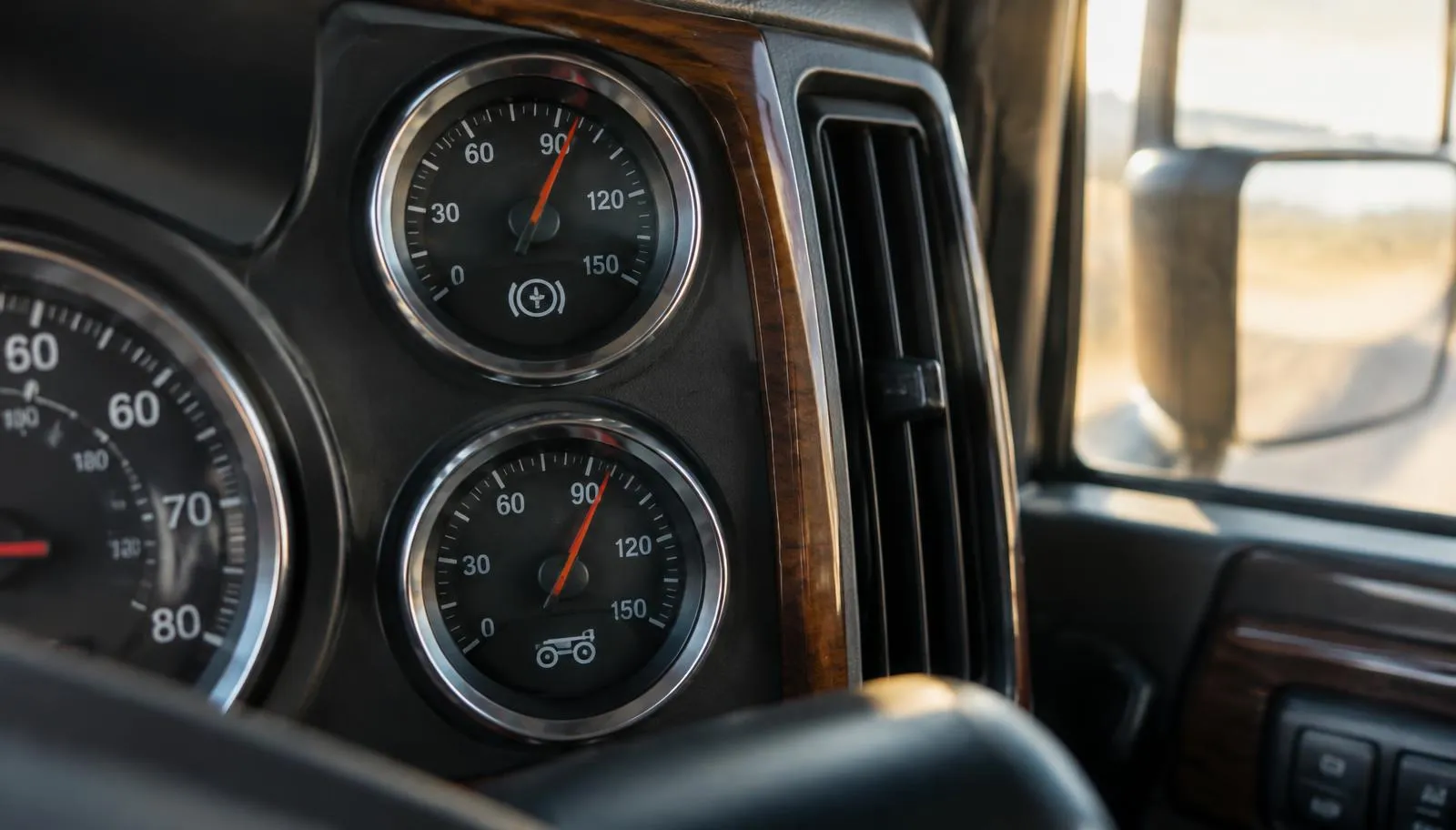
Air brakes are built to be forgiving. They have backups, warning systems and spring brakes that apply if pressure drops too low. That's a good thing, but it also means drivers can keep running with a problem that's slowly getting worse. Most air brake trouble gives warning signs well before it becomes dangerous. The trick is knowing what they are.
Air pressure builds up slowly
When you start the truck, the compressor should build pressure steadily. If it takes noticeably longer than it used to, something is wrong. Common causes include a worn compressor, a leaking line or fitting, a governor problem or a clogged air dryer. Slow build-up also gets worse in cold mornings, so a truck that is "a little slow" in summer can become a real problem later.
You can hear or feel air leaking
A hiss with the engine off is the most obvious sign. Leaks often come from cracked lines, loose fittings, worn gladhands seals or damaged brake chambers. A good habit: with the engine off and the brakes released, watch the gauge for a minute. If pressure keeps dropping, there's a leak to find. Drivers who hold a CDL learned the leak-down test in training; doing it regularly is one of the best ways to catch trouble early.
The low air warning comes on
The low air warning light or buzzer is there for a reason. If it comes on while driving, pull over safely and find out why. If it comes on at random or flickers, the problem may be a leak, a failing compressor or a bad sensor. Either way, it needs a look.
The truck pulls to one side when braking
A pull usually means the brakes on one side are working harder than the other. That can come from brakes out of adjustment, a weak brake chamber, contaminated linings or a sticking component. Uneven braking is also hard on tires and can lead to a roadside inspection violation.
Brakes feel soft, slow or grabby
If you need more pedal than usual, if braking feels delayed or if the brakes grab suddenly, something has changed. Out-of-adjustment brakes are a common cause. So are worn drums and linings, moisture in the system or a failing valve.
Water or oil in the air tanks
Air systems pull moisture out of the air, and that water has to go somewhere. The air dryer and tank drains handle it. If you drain the tanks and find a lot of water or oily residue, the air dryer may need service or the compressor may be passing oil. In humid Southwest Louisiana, moisture is a constant battle, so dryer maintenance matters even more here.
Spring brakes dragging or not releasing
If the trailer or tractor feels like it's dragging, or the brakes won't fully release, the spring brakes may not be getting enough air. That can be a leak, a bad valve or a damaged chamber. Driving with dragging brakes overheats drums and linings quickly.
What not to do
Don't back off slack adjusters to "fix" a brake that keeps going out of adjustment. Automatic slack adjusters that need constant adjusting are telling you something else is wrong. Don't ignore a slow leak because the compressor keeps up with it. And don't keep running with a warning light because the truck still stops.
When to call a mobile mechanic
Any of the signs above is worth a professional look, especially more than one at a time. Getting brakes checked where the truck is parked saves a tow and keeps the truck out of a shop line. M3 Roadside handles brake and air brake repair at your yard or job site, and brakes are a big part of every DOT compliance check. We serve fleets and owner-operators across Sulphur and the Lake Charles area.
Need a hand? Send a request or call (409) 233-8574.